Showing posts with label western media. Show all posts

Sunday, November 13, 2016

Eulogy For The 2016 Election Coverage

As the country erupts in Internet flame wars (and sometimes actual flames on a pinata), people wait in dread as the day to Donald Trump’s inauguration counts down. But as mainstream news organizations use new storytelling techniques to cover the aftermath of the election--such as using Facebook Live to stream protest rallies and marches--this writer cannot help but mourn the election results for another reason.

Trump’s election indicates that the mainstream media lost much of its sway over the public.

Many of the major outlets endorsed Clinton which may have been proof to Trump supporters that the mainstream was inherently against their candidate, which doesn’t help when nearly every other headline mentions something about Trump and his supporters to the point where the public is desensitized. In this regard, the best aspect of the Internet is also its most crippling fault, that thing being the wealth of information available. 

It’s in a society’s best interest, after all, to have a marketplace of ideas. By encouraging a mass exchange of different information, opinion and arguments, the best ideas can shine through to guide decision-making that ranges from whom to put on the school board to whether the country should take military action. 

But as the country becomes more politically polarized, yet politically desensitized, the media and commentators struggled between objectively informing the country as per journalistic duty but also emphasizing the dangers of a Trump administration. Seeing how much effort the media put towards running negative headlines about Trump from the mid-primaries onward, it’s frightening how little impact it now seems to have had over those who voted for Trump.

At the same time, it can be difficult to persuade a person to overcome certain judgments and fears, to the point where one’s logic and reasoning is more often used to confirm biases rather than actively looking for evidence contradicting a person’s initial beliefs. A person, therefore, can claim to have spent hours researching and reading information on the Internet, but it’s not any good if the person is only receiving information from one source, or from a few sources that politically lean a certain way.
The danger of the Internet is that in the modern marketplace of ideas, social media feeds and selective Google searches make it easier for a person to receive information that leans one way or another. We are living in an era where a person’s media literacy is great if they receive news from a liberal outlet and a conservative outlet, let alone actively trying to critically and objectively analyze the messages of either one. This era of weakened trust in mainstream outlets and in poor media literacy is troubling considering that Balkan teenagers can run pro-Trump websites full of inaccurate or misleading information that nevertheless generates hundreds of thousands of engagements on social media.
As the country protests and braces itself for a Trump presidency, so too should mainstream media. Not only has the election highlighted the people’s distrust, but also shown that a polarized electorate is steadfast to sources that align with their own biases, regardless of reliability. The fourth estate is meant to be an institution that stands between politicians and the greater interest of the public. But as we watch live-streams of protests around the country, however, we witness what happens when the fourth estate fails to engage the majority of the electorate.

Tuesday, October 25, 2016

The John Oliver Effect

(Democracy Chronicals/Creative Commons)
One of my guilty pleasures is curling up with my laptop or phone and binge watching episodes of Last Week Tonight With John Oliver. There is something about him that I instantly like; maybe it's the British accent or his glasses. It looks like I'm not alone in liking him, either. Even though the show is only two years old, 4.6 million people tuned in to watch his show every week in 2015, according to an HBO press release. The show's Youtube channel alone has 4,185,191 subscribers with 902,822,519 million views.

And maybe that's the beauty of it. When it comes to late-night talk show hosts, interviews with celebrities, comedy bits and performances are just as important to the shows as the host's own commentary and content--both satirical and serious--on social issues and current events. News satire shows such as The Daily News Show with Jon Stewart  and The Colbert Report had already popularized the genre before HBO started airing Oliver’s show each Sunday, but Oliver--who was a writer and occaisional stand-in host for Stewart--has gained some celebrity in his own right based on the content of his shows.

“Comedians mock our cultural and political institutions on TV all the time.” Victor Luckerson wrote in an article for TIME, “But it’s not every day that a comic’s jokes crash a government website or directly inspire legislators to push for new laws.”

The typical Last Week Tonight episode goes as follows. Oliver recaps the week, laced with snarky jokes and humor (example). Then Oliver delves into the main part of the show that focuses on a particular issue such as the death penalty, the legitimacy of scientific studies and doping. Although the topics Oliver focuses on are sometimes grim and controversial, Oliver still manages to bring sketches, jokes and analogies that tastefully lighten the mood and dispels negative emotion through laughter.

One example of this was in Oliver’s opening moments of a segment on abortion, in which he addressed Americans who were against abortion under all circumstances, “Frankly, you are excused from watching the rest of this, but do rejoin us at 11:29 because once I’m done talking about this we’ll all be watching a video featuring a bucket of sloths and I promise you it is almost violently delightful.”

During the segment Oliver ran soundbites and referenced stories about the difficulties of state abortion laws, many of which were meant to invoke a sense of sadness or anger as a way to persuade viewers on paying attention to abortion policy issues going on in the country. Yet, not only did Oliver mock politicians for their policies, he delivered on his promise at the end of the show by showing the sloth video and showing a real sloth in the studio.


Humor has always been used to give social commentary (“Never speak disrespectfully of society, Algernon,” Lady Augusta Blackwell chided in Oscar Wilde’s The Importance of Being Earnest, “Only people who cannot get into it do that”). The humorous appeals Oliver makes to offset the tension or heavy emotion in his segments might be a bit ridiculous, but that just makes Oliver seem that more appealing. He’s able to appear like he knows the issues and his sense of humor lightens the mood and makes audiences more open to what he has to say.

With that in mind, having such a command over his audience has led to what Luckerson called “The John Oliver Effect.” This effect was felt when the FCC website servers crashed after Oliver urged them to engage with the regulatory body regarding net neutrality. About two days after Oliver criticized Miss America Organization assertion that it is the largest provder of scholarships for women, one of the organizations John Oliver mentioned, the Society of Women Engineers, received $25,000 in donations. When Oliver established his own church to exploit how easy it is for televagelists to take money from people, he received $70,000 from “church-member” contributions that he ultimately donated to Doctors Without Borders. Luckerson also attributes Oliver’s segment on civil forefeiture as the reason why Attorney General Eric Holder would enact limitations on the law.

Even though Oliver’s show is news satire, the reach and impact of some of his shows--such as where he roasted Trump and “Donald Drumpf” became a popular search term--is the kind that many journalists aspire to have. Many of the segments on his show are well-researched, as well; according to NPR he has four researchers on his team with journalism backgrounds.

But as Oliver said himself in that same piece, he has a firm opinion on whether his work can actually be considered journalism:

No. There's a pretty simple answer to that. No, it is not. No, we are a comedy show so everything we do is in pursuit of comedy. ... It's confusing to me somehow the fact that this is often the line of questioning. ... It almost makes me feel like, when people say: "This is journalism," it almost makes me feel like: Am I a terrible comedian? ... Is it like looking at a sculptor and saying: "Well it's not art, so are you trying to build a wall? What exactly are you working on here?"

As a journalism major, I don’t consider his work as journalism in the traditional sense, where many of his presentations, it can be argued, are skewed with a liberal bias. I do, however, know that what journalism looks like changes all the time (in the old days, for instance, a journalist would write “this reporter” when referencing himself or herself, but today it’s acceptable to use “I” and “me”). Perhaps Oliver's brand of comedy will become an acceptable way of receiving the news, especially now that newspapers are undergoing massive changes...and much for the worse.


But while his work isn’t traditional journalism, it seems to me that Oliver’s show puts a slightly higher emphasis on “news” in “news satire” than some of his contemporaries. Instead of merely reacting to the week’s news cycle, Oliver delves into issues and hosts a show that gives at least the impression of being extremely well-researched. And regardless of Oliver’s intentions, the result of mixing an in-depth look at journalism with humor makes people more open to taking in the information and reacting to it--which they are, to the tune of millions each week.

Perhaps I should take a class on how to be a comedian. “The Carreon Effect” has a nice ring to it.

Wednesday, October 12, 2016

Haidt, Trump Supporters and the Big Elephant

Early this morning I read this headline from a Washington Post newsletter: "Republican politicians fall back in line behind Trump after defecting"

My immediate reaction was to spit out my cereal.

As a person who believes in treating others with respect and dignity, I was mad (but not surprised) when I saw the video of Trump's crude statements on Friday. In this way I felt truly sorry for the GOP. I do not doubt for a minute that there are GOP and Democrat politicians who have said something just as crude once or twice (at least).  Yet in this year's race the Donald is the big elephant in the room, and it seems that the establishment GOP is sacrificing its face to longtime Republicans and progressives of the world by standing behind him (not that progressives tend to have a favorable view of the GOP in the first place anyway).

As the weekend went on I began to have hope--perhaps NOW people will see the light and look for other candidates to vote for besides Trump. That hope grew as--one by one--the big wigs of the GOP distanced themselves from trump.

The presidential debate gave me a little bit more hope; surely the American public would be weirded out by Trump lurking behind Clinton, which is strange considering he says that he isn't what all the columnists have pegged him out to be.

And yet. No.

If anyone is wondering why people still would support Trump, I would point them in the direction of The Righteous Mind: Why People are Divided By Politics and Religion by Jonathan Haidt, who looks at moral psychology in relation to politics.

One of the big ideas in the book is that the human mind can be likened to an elephant being controlled by a rider. The elephant represents our biases, tendencies, and intuitions. The rider is our logic and rationale.

To summarize his view, the mind's elephant is something that can be controlled, but it's also very hard to do (hence the elephant metaphor). Even when you try to use your logic and reasoning, he says, the rider will often go the way of the elephant. Confirmation bias is an example of this, because with the power of Google you can always find a study or an article that supports your point of view (and you can find a study or an article that contradicts what you find).

It's too simple to say that Trump's supporters want him to be president because their biases align with his proposed policies; that much is obvious. But let's take a look at one demographic: women voters. One would think that all women, at least, would defect from Trump after this weekend, right?

Nate Silver's map says otherwise:


I have a liberal-leaning elephant, so I was happy to see that women are forecasted to overall vote against Trump in the election, but what about those red states? Surely the mothers, daughters and wives in those states would feel indignant about Trump's comments, especially since women voters are liberal and vote democrat, right?

Turns out there's something else at work.

Before this semester I believed that all women were Democrats; I live in California, and the first openly Republican woman I ever met was my AP Government teacher from my senior year of high school (and even then, she grew up in Arizona) But after looking up some statistics I realized that it isn't the case. It seems that white women voters are a major group to appeal to; they consistently have the highest voter registration and voter turnout rates.

White women voters also vote Republican, and have voted for the Republican candidate in the presidential election for the past decades.

And based on Nate Silver's map, it seems that for women voters in conservative states (who are probably mostly white), it would take more than a lewd video filmed a decade ago for their elephants to be swayed towards Hillary Clinton's camp.

Since my elephant is only slightly more in control than my rider, my first impulse is to feel outraged that women would still want to vote Trump after literally everything  he said about women. But perhaps there's something more. By applying Haidt's so-called Moral Foundations Theory provides some explanations why some people might support Trump so strongly, but that will probably be a post for another day.

Until then, I invite readers to check out the Moral Foundations Theory website and think on this:

  • There people who fear the notion of domestic terrorism more than they care about lewd comments made about married women who let Trump near them 10 years ago.
  • There are people who care more about others who try to restrain their speech than they want to consider people's feelings on a controversial topic.
  • There are people who are willing to listen to people who agree with them more than they want to listen to the mainstream that seems to distort the truth more and more each day.
If the above triggered your elephant against me in any way, good. Let's have more conversations on this. When it comes to thinking about who Trump's supporters are and why they support him, I don't think falling into old tropes (such as the uneducated go to Trump and the university graduates go to Hillary) is going to cut it for this race. 

There's something more at work here where the possibilities range from xenophobia to religious values; despite not being the biggest fan of the GOP I don't think the majority of its voters are utterly stupid. They know that Trump isn't the best candidate in the world. But what is it about Trump that moves their elephants towards him? Is it just that these voters hate Hillary that much? Or is there more than that?

Saturday, October 8, 2016

Rodrigo Duterte: Case Study in News Coverage of Non-Western Countries


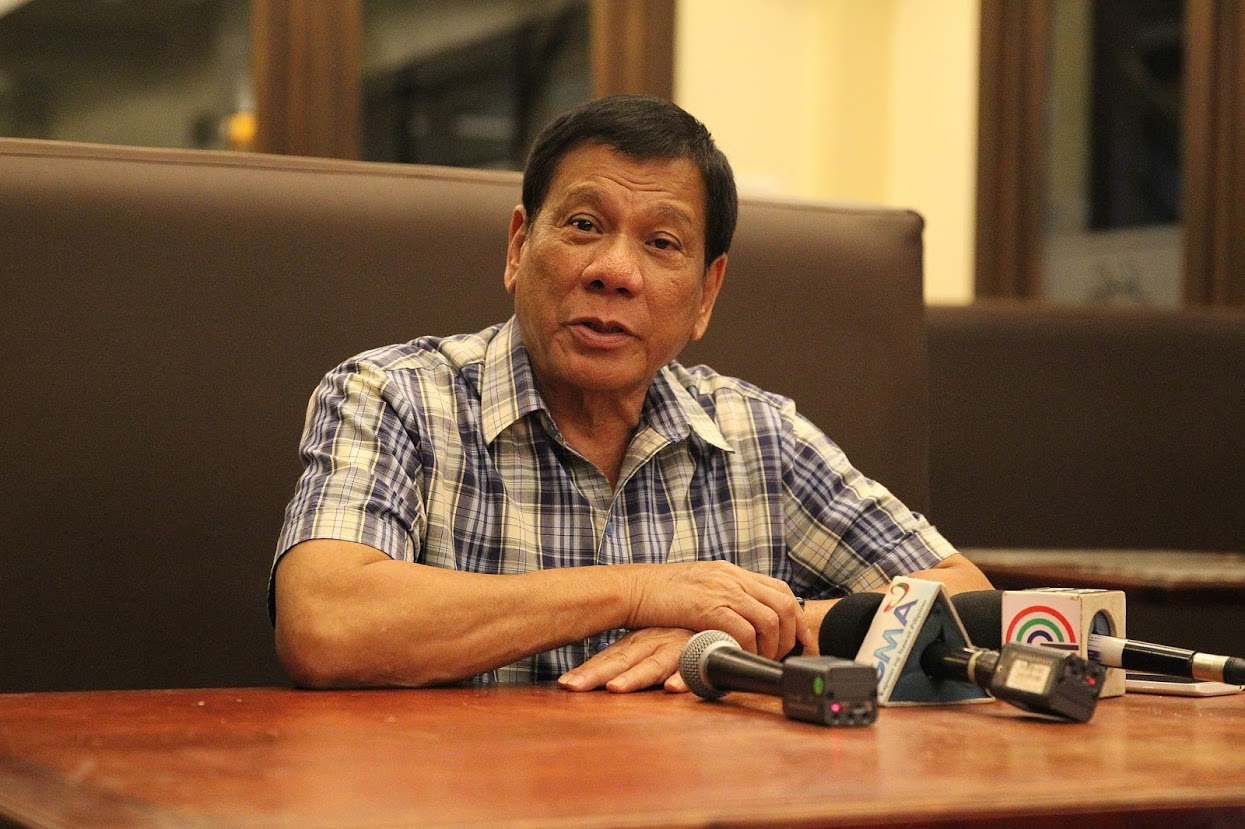
Philippines President Rodrigo Duterte has been perhaps one of the more controversial figures in international news. When he stepped onto the scene early this year, news outlets such as Washington Post and NBC News likened Duterte to the Donald Trump of Asia. What many outlets failed to report--and what many Filipinos criticize them for-- is why Duterte is so popular in the first place, and how a man who called the leader of the free world a son of a whore can be beloved in the Philippines. In this way, tracking coverage of Duterte can be used as a case study in how media fails to properly report on news in non-Western countries. Without completely discrediting the works of reporters who do attempt good journalism (and there are many), Western bias, pressures of modern journalism and limitations of non-Western media outlets are big contributors to incomplete reporting.
It is not a secret that the former mayor of Davao--a prominent city in the Southern Philippines--has a controversial mouth. During his term as mayor, he once expressed deep anger at escaped criminals who raped and killed a New Zealand missionary: “I was angry because she was raped, that’s one thing. But she was so beautiful, the mayor should have been first. What a waste.
When confronted over these statements during his campaign earlier this year, Duterte replied, as quoted by Philippine news outlet Rappler, “No, it was not a joke, I said it in a narrative I was just talking plain sense narrative..”
This statement was deplorable to many people, especially to those outside of the Philippines. Duterte seemed, at least to Last Week Tonight host John Oliver, even worse than Trump.
“If you are feeling depressed about the current state of [America’s] election,” said Oliver in a segment that highlighted Duterte’s crude remarks and aggression, “let me give you some perspective from the Philippines.”
But writers from mainstream outlets agreed, too.
While their politics may be different, this unpredictable new leader, and the timing of his rise, should worry the world much more than Trump ever could, academic Tom Smith wrote for the Guardian.
And yet, this is where cultures clash. Because although people might scratch their heads as to why the Philippines would want to have a president who rules with a strict hand, much of mainstream coverage didn’t emphasize is the nuances of why  Filipinos like Duterte so much (with one exception being Time).
“I don’t think he actually meant that,” my 35-year-old cousin told me when I asked her about Duterte’s rape comments when I visited her in the Philippines, “It is more important what he does as president, and that he makes the country safe.”
“He is standing up against countries who want to control the Philippines,” her sister added.
In a nutshell, the world is only barely comprehending the drug culture and crime in the Philippines when Filipinos have been living through it for years. Duterte, to them, represents a break from politicians who are part of the few elite political families that have controlled the politics of the Philippines for decades. Between his track record of reducing crime in Davao and his tough demeanor, Duterte was seen by Filipinos as a way to see the country improve. Even though more than 3,000 people have died as part of Duterte’s war on drugs, according to CBS News, the tough-talker from Mindanao currently enjoys a 76% approval rating. The reasons why Duterte enjoys this sort of popularity are merely hinted at or added as an afterthought on the bottom of articles, such as in the CBS piece.
But this tilt in media coverage is also part of the failings of modern journalism, one failing being the pressure for viral content. According to the Pew Research Center weekday circulation in newspapers fell 7% between 2010 and 2016. Advertising dropped 8% between 2014 and 2015, the greatest since 2009 according to Pew. While the report noted that there is growth in digital ads revenue, it has not made up for the decline in print.
“For the five [publicly traded] companies that broke out digital vs. non-digital ad revenue for 2014-2015, non-digital ad revenue declined 9.9%, while digital’s decline was less steep (-1.7%). (The remaining companies did not provide a digital/non-digital breakdown in their SEC filings.)”
In addition to the decline of viewership in newspaper outlets, it seems that advertising culture has also changed over the years. With new technology and increasing accessibility to the internet, brands and products are able to have their own websites and social media accounts. It would make more sense for brands such as Dove or Coca-Cola to create their own marketing campaigns via Twitter or Facebook accounts than place an ad in a newspaper; the Internet has made it easier for brands to reach potentially interested consumers rather than using news outlets.
This puts an increasing pressure for outlets to increase viewership and continue deals with their advertisers. While the business side and news side of news outlets puts pressure on editors and reporters to produce content that is quick to get online and is projected to go reach a lot of people. While well-reported content is still a priority and can go viral in their own right, it is easier and more cost-efficient to capitalize on a hot topic in a consumable format (Buzzfeed listicles, for instance) to get as many views and clicks as possible in a small time frame. This has been exemplified by billionaire Sam Zell, who owns Tronc, inc., which runs Los Angeles Times, Chicago Tribute and Orlando Sentinel.
“My attitude on journalism is very simple. I want to make enough money so I can afford you,” Zell said to a reporter at Orlando Sentinel, “...You need to in effect help me by being a journalist that focuses on what our readers want.”

In the case of Duterte, he has much fodder for viral content. With his often-crude way of speaking, his strongly aggressive manner, disregard for mainstream press and his heavy-handed mayorship of Davao City, it was too easy for media to label Duterte as the “Donald Trump of the Philippines.” Having such headlines and framing stories on the Philippines elections with that angle is good for viewership. These stories took a subject people are familiar with and feel strongly about and implied that there is another person in the world with as much of an infamous public image as the Donald. Stories with those angles and ones focusing on Duterte’s sayings, mannerisms and aggressiveness invoke sentiments such as anger, shock and disgust. They also further appeal to those biased against Trump by emphasizing the similarities between the two men, especially as their labels of “outsider politicians.”
As anyone with a particularly opinioned friend can attest, events and news stories that invoke strong, negative emotions drive people to take to social media as a conduit for their thoughts, taking form as long Facebook statuses/posts, a long, angry series of tweets or a rant video on Youtube, just to name a few. In this way media outlets that liken Duterte to Trump for the sake of generating interest and engagement are perfect examples of what Youtube educator CPG Grey would call “spreading thought germs.” CPG Grey goes into details about this in the video below.

As Grey says, sometimes angry thoughts don’t last too long (in this case when surrounding people agree). But it seems that particularly angry thoughts do not always lead people to conduct their own personal research to find other content with an opposing view or framing. Though Grey mentions that angry thought germs can die, the original impression consumers had with the content will still be in the back of their heads. So, again, the nuances of Duterte as his own candidate who is popular among Filipino citizens is lost as most people who read western media have an image of Duterte on the same level of Trump. Spreading so-called thought germs is good for virality, which is good for the business side of media outlets. The catch in terms of producing a better-informed society, however, is spreading thought germs from informational stories that give a whole picture of a person, event or issue. With headlines and stories that fail to give such a holistic view, people are unable to accomplish that, which perpetuates opinions based on incomplete information, which might lead to a misunderstanding of a subject.
Yet in fairness to reporters, international stories can be better reported if allowed the time and the resources. News editors and publishers, as the gate keepers of news, determine which stories are worthy to pursue, and to bring back an earlier point, the business side of media outlets urge for viral content made in a cost-efficient (i.e. short) amount of time. In a Neiman Lab post, Ken Doctor discussed the consideration of pricing news stories, that a single investigative piece (California Watch’s “On Shaky Ground”) that took 20-months to produce cost half a million dollars. Doctor quoted Deseret Media CEO Clark Gilbert’s belief that it’s important to know the pricing of a story, whether it’s staff-written or freelanced.
It doesn’t mean I’m not willing to pay for content,” Gilbert said in Doctor’s post,“I’m paying a boatload for stories that are a commitment to my audience.”
The implication of Gilbert’s words is clear: while news editors may see the value of going in-depth about certain issues, the focus is on content that would directly affect the outlet’s audience as opposed to issues that would make them more informed, but aren’t necessarily as popular. With this in mind, reporters these days are tasked with researching information on the subject, finding subjects/experts willing give a short commentary and writing a piece that is expected to have at least half a million reactions on Facebook alone. That isn’t to say long, in-depth reporting on certain issues doesn’t exist; many people like reading long content if the subject matter is interesting. But such stories are expensive and might not be viewed by many. For these reasons, many reporters might potentially have quotes that might present an incomplete view of a subject due to limited time to contact/find good sources for interviews. Some facts that would add to a person’s view might be missing because of time constraints in conducting good research.
The institution of mainstream media operates on a 24-hour news cycle where the pressure to create much-viewed content at a low cost. Yet there is one other problem in international reporting other than the limitations of mainstream outlets and the potential Westernized bias of both the reporter and the news consumer-- local media outlets in the countries where the subject at hand takes place in might experience its own limitations as well. Outlets in other countries, for instance, do report on timely news. There is often, however, some limitations in the reporting from local outlets. Despite occurring in the same place as where a subject is, a local news outlet would not have quite the same audience reach to the rest of the world as, say, CNN.
Language barriers and even more limited resources prevent outlets in some countries from offering in-house translations of articles or even having a good website to publish its stories on. In addition to that, the countries that are the subject of international news might have major restrictions on the media, whether through having only state-controlled outlets or controlling reporters through imprisonment or threats of physical violence. This affects the trustworthiness of local outlets in non-Western countries in which the truth is altered to show a country in a more favorable light. With these factors combined, local reporters in non-Western countries are limited in regards to reporting on the issues occurring in their own respective country, both in terms of free speech and in getting worldwide visibility.
In the case of the Philippines media covering Duterte’s election, the above points are somewhat applicable because major broadcast outlets in the Philippines have a small worldwide reach through various Filipino communities living abroad and the country is considered dangerous for local reporters by the Committee to Protect Journalists.
Yet a big limitation of non-Western media that was exemplified by the Philippines was lack of staff. In a Subselfie post that looked critically on Philippine media coverage of the election, CNN Philippines producer JM Nualla noted that some major Philippine media outlets took pains to eliminate conflicts of interest in their coverage, making reporters disclose their relationship to the presidential candidates and identifying potential areas of conflict. Those who were actively involved in the campaigns took a leave of absence, according to Nualla. With downsized staff, however, there was even more pressure on reporters covering the election, some even making major errors such as a social media producer posting a personal opinion of Duterte on the official Facebook page of the news outlet rather than his/her personal account.
Nualla also added, “Journalists complained of being too exhausted from covering all of Duterte’s campaign events that they could not cover his midnight sorties because they had deadlines to meet for news stories of the day.”
If there’s anything to gather from looking at coverage of Duterte, particularly in his election, it’s that covering international news can be tricky; cultural nuances can be lost even with reporters’ best intentions. But according to this list compiled by data blogger Nate Silver, some of the most influential news outlets on Google News and Google Blogs are Western-based outlets, such as The New York Times, Washington Post, Wall Street Journal and Bloomberg. Considering that Google is so widely used, there is a huge potential for Western-centric bias even when people are looking up world news. This is problematic because having a Western-centric mindset might prevent both the audience and reporters from thinking of certain cultures complexly, such as why local Filipinos are willing to overlook Duterte’s more crude remarks for the hope that they can finally feel safe. Coverage of the Philippine elections by the country’s major news outlets has shown that many non-Western countries can be limited in their own resources and skills to report the news. With that in mind, Western media needs to be diligent in how it reports the news from non-Western countries. To do otherwise will perpetuate an incomplete picture of world issues.